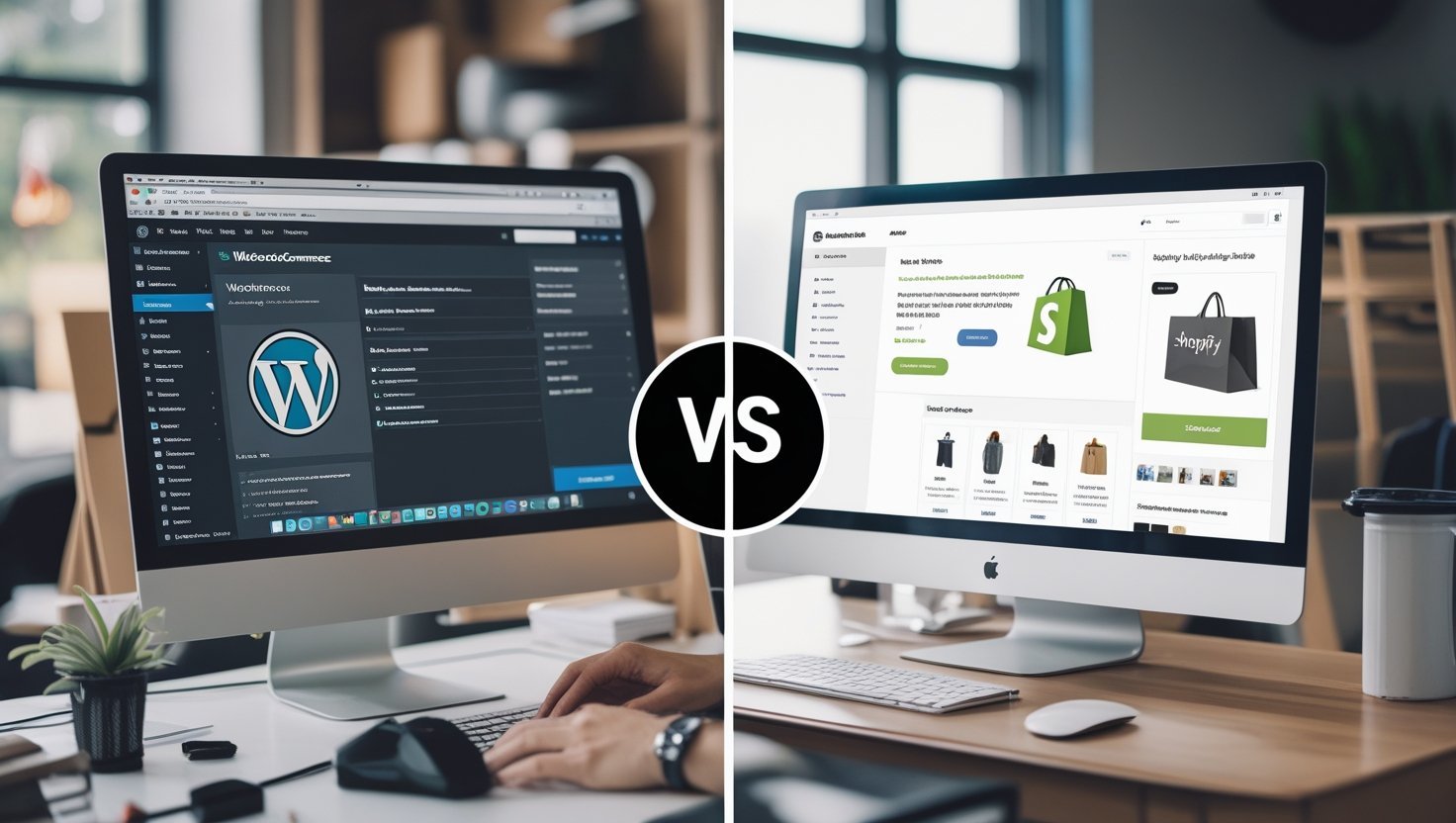
WordPress vs. Shopify: Which One Is Best for Your Online Store in 2025?

Introduction

Choosing the right platform for your online store is crucial for success. WordPress (with WooCommerce) and Shopify are two of the most popular eCommerce platforms, each offering unique advantages. In this guide, we compare WordPress and Shopify to help you decide which one suits your business in 2025.

1. Ease of Use

  • Shopify: A fully hosted platform with an intuitive, drag-and-drop interface. Ideal for beginners.
  • WordPress (WooCommerce): Requires manual setup and hosting but offers greater customization options.

2. Customization & Flexibility

  • Shopify: Offers customizable themes but has limitations in terms of full design control.
  • WordPress: Provides complete flexibility, with thousands of themes and plugins for unlimited customization.

3. Cost Comparison

  • Shopify: Monthly plans start at $29, plus transaction fees unless you use Shopify Payments.
  • WordPress: Hosting costs vary but can be more affordable long-term. WooCommerce itself is free, but premium plugins may add costs.

4. SEO & Marketing Features

  • Shopify: Built-in SEO tools and integrations with email marketing and social media.
  • WordPress: More advanced SEO capabilities with plugins like Yoast SEO and Rank Math, allowing greater control over rankings.

5. Payment Options

  • Shopify: Supports multiple payment gateways but charges extra fees for third-party processors.
  • WordPress: WooCommerce offers more flexibility with payment gateways, including PayPal, Stripe, and crypto options, without additional transaction fees.

6. Scalability & Growth

  • Shopify: Best for businesses that want a hassle-free, managed solution with scalability.
  • WordPress: Ideal for businesses needing complete control over customization and expansion.

Conclusion

  • Choose Shopify if you want a simple, managed solution with minimal technical setup.
  • Choose WordPress (WooCommerce) if you want full control over customization and lower long-term costs.

Both platforms are excellent, but your choice depends on your business goals, budget, and technical expertise.


Best Payment Gateway Options for Your Online Store in 2025

Introduction

Choosing the right payment gateway is essential for running a successful online store. In 2025, businesses need secure, fast, and globally accepted payment solutions to cater to their customers. Here’s a look at the best payment gateways available for eCommerce.

1. Stripe

Stripe is one of the most popular payment gateways due to its ease of use, flexibility, and developer-friendly features.

Key Features:

  • Supports multiple currencies and payment methods.
  • Seamless integration with Shopify, WooCommerce, and Magento.
  • Advanced fraud detection and security features.
  • Subscription and recurring payment support.

2. PayPal

PayPal remains a trusted option for online payments, offering a simple checkout experience for users worldwide.

Key Features:

  • Trusted by millions of online shoppers.
  • One-click checkout for returning customers.
  • Buyer protection and fraud prevention.
  • Supports PayPal Credit and Venmo transactions.

3. Square

Square is an excellent option for businesses that operate both online and offline.

Key Features:

  • Unified payment processing for eCommerce and physical stores.
  • Built-in analytics and sales tracking.
  • No monthly fees; pay per transaction.
  • Supports invoicing and digital receipts.

4. Authorize.Net

Authorize.Net is a reliable choice for businesses that need a robust and secure payment solution.

Key Features:

  • Supports credit cards, e-checks, and mobile payments.
  • Advanced fraud detection and security tools.
  • Subscription and installment payment options.
  • Seamless integration with major eCommerce platforms.

5. Crypto Payment Gateways

As cryptocurrency adoption grows, more businesses are accepting digital payments.

Top Crypto Payment Gateways:

  • Coinbase Commerce – Accepts Bitcoin, Ethereum, and other major cryptocurrencies.
  • BitPay – Offers instant crypto-to-fiat conversion.
  • NOWPayments – Supports multiple cryptocurrencies with easy API integration.

Conclusion

Selecting the right payment gateway depends on your business needs, target audience, and security requirements. Whether you prefer traditional solutions like Stripe and PayPal or emerging options like crypto payments, having a reliable and secure gateway is crucial for your online store’s success in 2025.

How to Create Content Using AI in 2025

Introduction

AI has transformed content creation, making it faster, more efficient, and highly personalized. In 2025, businesses and creators are leveraging AI tools to generate blog posts, videos, and social media content with minimal effort. Here’s how you can use AI to create high-quality content that engages your audience.

1. AI-Powered Writing Tools

AI writing tools help generate blog posts, product descriptions, and marketing copy with ease.

Top AI Writing Tools:

  • ChatGPT – For generating high-quality blog content and social media captions.
  • Jasper AI – Specializes in marketing and SEO-optimized content.
  • Writesonic – Helps create compelling ad copy and email campaigns.

2. AI for Video and Image Generation

AI can now create professional-quality videos and images, reducing production time and costs.

Best AI Content Tools:

  • Synthesia – AI-generated videos with realistic avatars and voiceovers.
  • DALL·E & MidJourney – AI-powered image creation for blog posts and branding.
  • Pictory – Converts text into engaging video content.

3. AI for SEO and Keyword Optimization

AI-driven SEO tools ensure your content ranks higher on search engines.

Recommended AI SEO Tools:

  • Surfer SEO – Analyzes competitor content and suggests improvements.
  • Clearscope – Helps with keyword optimization and topic research.
  • Frase – Uses AI to create SEO-friendly blog structures.

4. Automating Social Media Content

AI can schedule and generate social media posts tailored to audience preferences.

Best AI Social Media Tools:

  • Lately AI – Creates and schedules social media content automatically.
  • Canva AI – Generates designs and captions for posts.
  • Buffer AI – Suggests optimal posting times and content strategies.

Conclusion

AI is revolutionizing content creation in 2025, enabling businesses and creators to produce high-quality, engaging material with minimal effort. By leveraging AI writing tools, video generators, and SEO optimizers, you can stay ahead of the competition and streamline your content strategy.

How to Find the Best Dropshipping Products in 2025

Introduction

The dropshipping industry is constantly evolving, and staying ahead in 2025 requires sourcing trending and profitable products. With increasing competition, it’s crucial to find the right products that will sell well and generate high margins.

1. Use AI-Powered Product Research Tools

AI has revolutionized product research, making it easier to predict trends and analyze consumer demand.

Best Tools to Use:

  • Sell The Trend – AI-based trend prediction for winning products.
  • Dropship Spy – Provides insights into trending products and competitor analysis.
  • Niche Scraper – Helps identify high-demand items with low competition.

2. Analyze Market Trends and Consumer Demand

Understanding market trends ensures you invest in products with long-term demand.

How to Research:

  • Check Google Trends for product search growth.
  • Monitor social media platforms like TikTok and Instagram for viral product ideas.
  • Use Amazon Best Sellers and AliExpress Hot Products lists to identify trending items.

3. Focus on Niche-Specific Products

Selling niche products reduces competition and attracts a loyal customer base.

Top Niches for 2025:

  • Eco-friendly products (reusable home items, biodegradable materials)
  • Health & wellness (smart fitness gear, organic supplements)
  • Tech gadgets (AI-powered devices, smart home accessories)

4. Partner with Reliable Suppliers

A trustworthy supplier ensures product quality and fast shipping.

Where to Find Suppliers:

  • AliExpress & Alibaba – Great for a wide range of suppliers.
  • CJ Dropshipping – Offers faster shipping and product customization.
  • Spocket – Connects with US and EU-based suppliers for quicker delivery.

5. Test and Validate Products Before Scaling

Testing helps determine if a product is worth scaling to a larger audience.

How to Test:

  • Run small Facebook or TikTok ad campaigns.
  • Use influencer marketing to gauge customer interest.
  • Sell on platforms like Etsy or eBay before launching a full store.

Conclusion

Finding winning dropshipping products in 2025 requires a mix of AI tools, market research, and supplier reliability. By staying updated on trends and testing products before scaling, you can build a successful and profitable dropshipping business.

SEO in 2025: Rank Higher on Google

Introduction

Search engine optimization (SEO) continues to evolve, and 2025 brings new challenges and opportunities for ranking higher on Google. With constant algorithm updates and advancements in AI, understanding the latest SEO trends is crucial for website success.

1. AI and Search Intent Optimization

Google’s AI-driven algorithms, such as RankBrain and BERT, are now more advanced than ever. They focus on understanding user intent rather than just keywords.

How to Adapt:

  • Create content that directly answers user queries.
  • Optimize for conversational and natural language searches.
  • Use structured data to help Google understand your content better.

2. Voice Search and Mobile Optimization

With the rise of smart assistants like Siri and Google Assistant, voice searches are increasing. Mobile-friendliness is also a key ranking factor.

Key Strategies:

  • Use long-tail keywords that match spoken queries.
  • Ensure your website is mobile-friendly with fast loading times.
  • Optimize local SEO for “near me” searches.

3. E-E-A-T and Content Quality

Google now emphasizes Experience, Expertise, Authority, and Trustworthiness (E-E-A-T) for rankings. High-quality, informative, and credible content ranks higher.

Best Practices:

  • Publish well-researched, in-depth content.
  • Include expert opinions and authoritative sources.
  • Build backlinks from reputable websites.

4. Visual and Video SEO

Google increasingly prioritizes images and videos in search results. Optimizing multimedia content can boost visibility.

Optimization Tips:

  • Use descriptive alt text and file names for images.
  • Optimize video titles, descriptions, and transcripts.
  • Leverage YouTube SEO for additional ranking opportunities.

5. Technical SEO and Core Web Vitals

Technical aspects of SEO remain critical, with Google focusing on page speed, user experience, and security.

What to Improve:

  • Optimize loading speed by compressing images and using caching.
  • Ensure secure browsing with HTTPS.
  • Improve site structure with clear navigation and internal linking.

Conclusion

SEO in 2025 requires a blend of AI-driven strategies, high-quality content, and technical optimizations. Staying updated with Google’s latest algorithm changes ensures your website remains competitive in search rankings.

Posted in SEO

How AI Is Changing Web Design and Development

Introduction

Artificial Intelligence (AI) is revolutionizing web design and development, making processes faster and smarter. From AI-driven website builders to automated coding and enhanced user experiences, AI is reshaping how websites are created and maintained.

1. AI-Powered Website Builders

AI website builders like Wix ADI and Framer AI generate fully functional websites based on user input. These tools eliminate the need for coding, providing businesses with fast, cost-effective solutions.

Benefits:

  • Quick website creation
  • No coding required
  • Automated design suggestions

2. AI-Enhanced Coding & Automation

Developers use AI tools like GitHub Copilot and Tabnine to speed up coding, detect errors, and improve efficiency. AI helps with automated code generation and debugging, reducing human effort.

How It Helps:

  • Faster development process
  • Error detection and bug fixing
  • Smarter code recommendations

3. Personalized User Experiences

AI-driven personalization improves user engagement by delivering tailored content and recommendations. Tools like chatbots and AI-powered search engines enhance interactivity.

Key Features:

  • AI chatbots for instant support
  • Personalized product recommendations
  • AI-driven A/B testing

4. AI for Web Design & SEO

AI tools like Adobe Sensei assist in creating stunning visuals, while AI-powered SEO tools like Surfer SEO optimize websites for search engines.

Advantages:

  • Automated image enhancement
  • Smart layout suggestions
  • AI-based keyword research

5. AI & Web Security

AI enhances cybersecurity by detecting threats and preventing attacks. Solutions like Darktrace and Google’s reCAPTCHA protect websites from fraud and malware.

Security Benefits:

  • Real-time threat detection
  • Automated security responses
  • Fraud prevention tools

Conclusion

AI is transforming web design and development by making processes faster, smarter, and more efficient. Businesses and developers that embrace AI will stay ahead in the digital landscape.